

Article details: Craft Doors USA comparison guide for homeowners, builders, and contractors. Updated August 24, 2026.
Modern and contemporary garage doors overlap, but modern follows a recognizable design language while contemporary describes a current, changing look. The complete combination of lines, materials, glass, finish, and architecture matters more than the label.
That distinction helps when you are choosing a custom wood door. A modern direction can provide a disciplined composition. A contemporary direction can respond to a roofline, window pattern, exterior material, or personal preference. Craft Doors USA hand-builds each door for its opening and design direction. For a broader look at clean-lined wood door ideas, see the modern wood garage door style guide.
Why Do Contemporary and Modern Garage Doors Get Confused?
Direct answer: modern describes a defined design language, while contemporary describes what feels current. Both may use simple lines, carefully placed glass, and limited decoration, so the terms are often used interchangeably. A custom door can sit near both categories when it combines modern proportions with present-day materials or a project-specific arrangement.
Modern design is commonly associated with function, geometry, and honest materials. Its visual order is intentional. Contemporary design is less fixed. It can borrow modern geometry while responding to today's homes, new material combinations, unusual window arrangements, or a less symmetrical composition.
- Modern: a consistent visual system with controlled proportions and a clear reference point.
- Contemporary: a current interpretation that can change with the home and the project.
- Transitional: a bridge between traditional and modern details, often with familiar proportions and reduced ornament.
These are design terms, not technical door classifications. The same horizontal wood pattern may read as modern on a low-slung home and contemporary on a house that combines stone, metal, and large windows. The surrounding elevation determines how the door is understood.
A useful test is to remove the product label and describe what you see. Does the door rely on repeated geometry, quiet surfaces, and a balanced rhythm? That points toward modern. Does it make a deliberate response to the home's newer materials, irregular openings, or stronger contrast? That points toward contemporary. This test keeps the discussion tied to visible decisions rather than trend language.
What Defines a Modern Wood Garage Door?
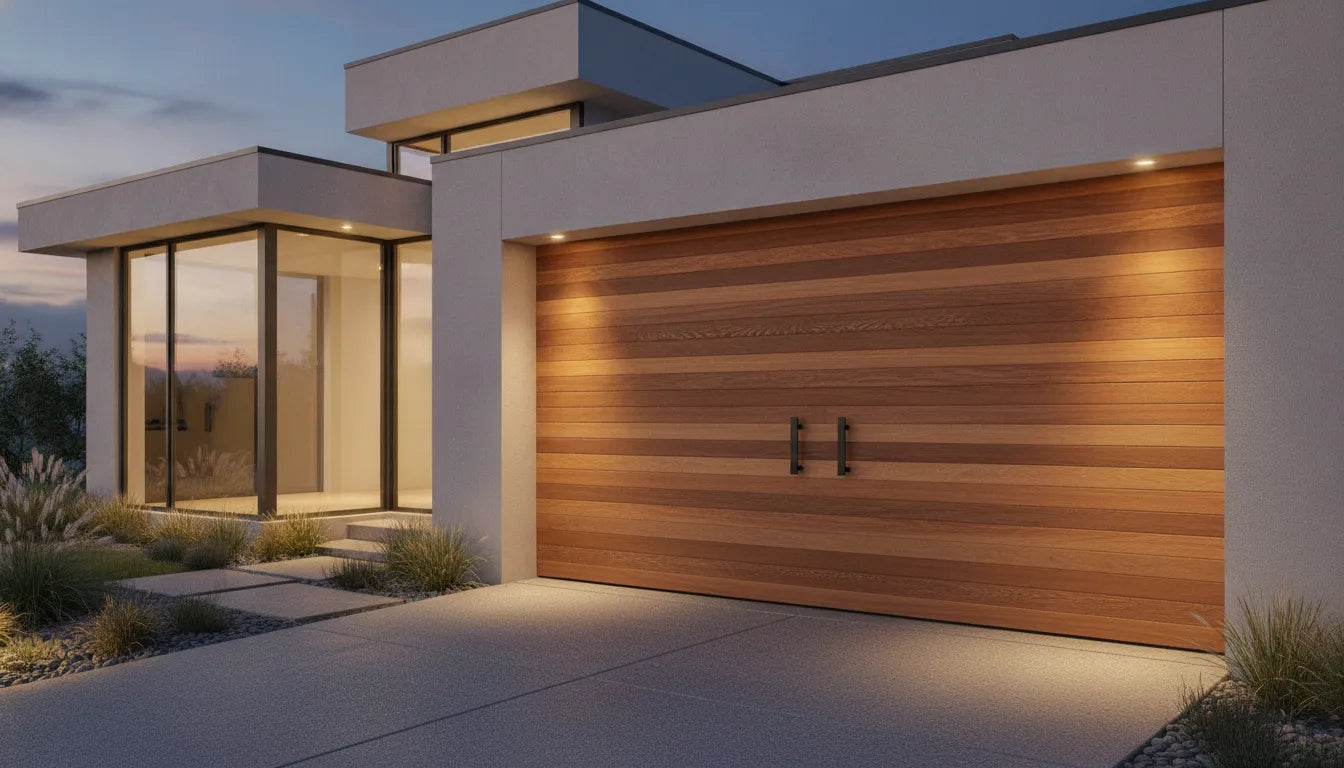
Direct answer: a modern wood garage door is defined by controlled geometry, simple panel composition, purposeful glass, and limited ornament. Wood can look modern when the grain, stain, hardware, and window layout support a calm visual rhythm instead of competing with the architecture.
- Clean geometry: straight lines and consistent divisions create an orderly face.
- Simple panel composition: the pattern is easy to read from the street.
- Purposeful glass: windows support light, privacy, and proportion rather than acting as decoration.
- Limited ornament: hardware and trim are selected as part of the design.
- Material clarity: wood, glass, and metal each have a defined visual role.
Craft Doors USA's Modern Landscape collection shows how these principles work in custom wood. Horizontal design directions, window options, and face patterns can be adjusted to the opening. A restrained pattern in knotty cedar feels warmer and more individual than the same pattern in a clearer, more uniform species.
Wood selection affects the result without changing the underlying geometry. Craft Doors USA uses #2 Knotty Western Red Cedar as its standard wood. Other choices include clear cedar, alder, cypress, Douglas fir, mahogany, marine grade plywood, and a largely knot-free cedar option. More than 19 semi-transparent stains are available, including custom color matching. Review the wood door stain colors when deciding whether the finish should feel quiet, warm, or high contrast.
Glass deserves the same level of control as the wood. A broad pane can make a simple door feel lighter and more open, while smaller panes create a different scale and privacy balance. Window placement should relate to the home's existing windows, not just the center of the garage opening. Hardware also matters. A restrained pull or dark accent can reinforce the lines without turning a clean door into a decorative one.
When Is a Garage Door Contemporary or Transitional?
Direct answer: a contemporary garage door responds to the current home and may use asymmetry, mixed textures, warmer wood, or an unusual window group. A transitional door keeps familiar proportions while reducing decorative detail. Both approaches help when a home's architecture does not fit one strict style.
Contemporary design gives the buyer more freedom to change panel direction, introduce measured contrast, or give natural wood character a stronger role. It does not mean adding every current trend. The best contemporary doors still have a clear visual reason for each material and division.
Transitional design often connects a traditional roof form with updated siding, stone, or windows. A rectangular panel rhythm, restrained hardware, and a quieter finish can keep the door from looking disconnected from either side of the home.
Contemporary does not require a door to abandon natural materials. In a custom wood application, visible grain can supply warmth while the panel layout, glass, and hardware keep the composition current. The strongest results usually limit competing ideas. One clear contrast, such as wood against dark metal or solid panels against a measured window group, is easier to read than several unrelated accents.
| Style | Reference | Panel layout |
|---|---|---|
| Modern | Defined language | Consistent geometry |
| Contemporary | Current architecture | Individualized geometry |
| Transitional | Traditional plus modern | Familiar, simplified detail |
The categories are guides, not rules. Start with the home, then choose the door details that make the elevation feel connected.
Look at the garage from the street and from the approach used by guests. A door that seems simple in a close product photo may become the strongest pattern on the front elevation. Note where shadows fall, how the entry door is framed, and whether the surrounding trim repeats a horizontal or vertical line. Those observations give the design discussion a useful starting point.
How to Choose Between Contemporary vs Modern Garage Doors
Direct answer: choose a modern direction when you want disciplined geometry and a repeatable visual system. Choose a contemporary direction when the door needs to respond to unusual proportions, mixed materials, or a more individual combination of details. A transitional approach can balance a home that sits between both.
- Read the architecture: identify the strongest horizontal, vertical, or symmetrical lines.
- Choose a panel direction: repeat those lines where they support the elevation.
- Connect the materials: select wood, stain, glass, and hardware as one specification.
- Check the operating format: overhead and swing-out configurations affect visible divisions and hardware.
- Review the proportions: approve a shop drawing before craftsmanship begins.
Operating format is part of the design decision. Craft Doors USA offers overhead doors that work with garage door opener systems, along with swing-out barn-style configurations using custom jamb kits and heavy-duty hardware. Every door is custom sized, so the visible divisions need to be considered with the opening and the surrounding trim.
The design process includes shop drawing approval before production. That gives homeowners, builders, and contractors a chance to review panel rhythm, window placement, wood, stain, and hardware as one connected design. See the hand-crafted door process for more context.
Contact Our Sales & Design Specialists
How Do Contemporary vs Modern Garage Doors Compare Side by Side?
Direct answer: compare the same opening, wood species, and stain before judging the style difference. The modern version may use evenly spaced sections, centered windows, and minimal hardware. The contemporary version may use the same base while changing the window grouping, introducing measured contrast, or giving natural wood variation a stronger role.
Craft Doors USA offers more than 48 custom garage door models across Carriage House, Overhead, Modern Landscape, Wishbone or Herringbone, and Classic categories. Compare the complete specification instead of relying on a style name or a single thumbnail. Scale and surrounding materials can change how a door reads from the street.
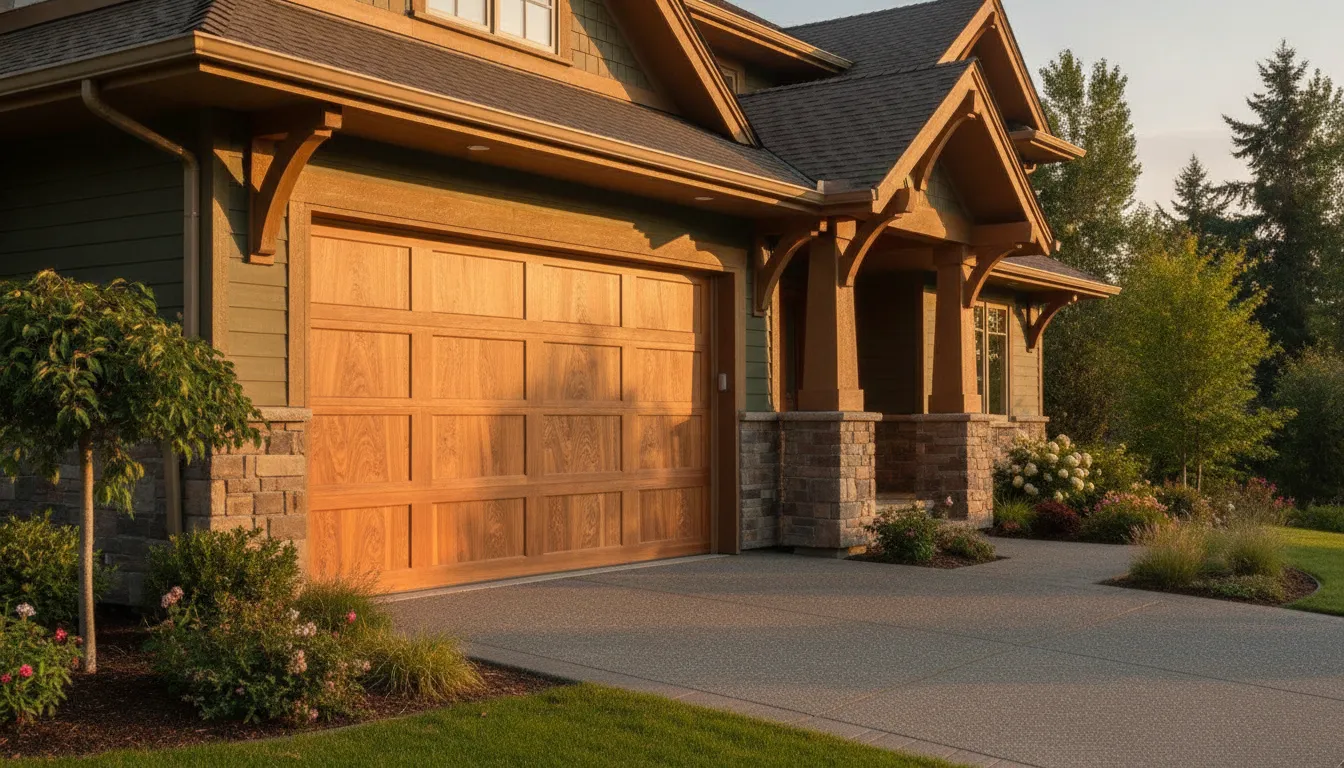
- Wood character: knotty cedar adds visible variation, while clearer woods create a more even field.
- Stain depth: a transparent finish highlights grain, while a deeper color increases contrast.
- Window scale: broad glass areas feel different from small divided panes on the same pattern.
- Hardware: simple pulls and dark accents can sharpen a clean design without making it ornate.
- Panel direction: horizontal, vertical, and diagonal construction change how the opening relates to the home.
Ask for the complete design direction, including wood, stain, window configuration, operating style, and hardware. A door described as contemporary in a catalog may read as modern after those details are selected. A modern base pattern can feel more relaxed when the wood grain and finish remain visible.
For a builder or contractor, this complete specification also makes review easier. Instead of passing along a style adjective, record the panel direction, wood species, stain, glass pattern, hardware, and operating format. Homeowners can then compare a drawing with the actual elevation and identify a mismatch before materials are finalized. That record is especially useful when the garage door must relate to a matching custom entry door.
Frequently Asked Questions About Contemporary and Modern Garage Doors
Are contemporary and modern garage doors the same?
No. Modern usually refers to a defined architectural language, while contemporary refers to a current and evolving look. They overlap because both can use clean lines, limited ornament, and carefully placed glass. The final classification depends on the complete pattern, materials, finish, and architectural setting.
Can a wood garage door look modern?
Yes. A controlled panel layout, deliberate proportions, limited decoration, and a restrained finish can create a modern direction while keeping the warmth of natural grain. The wood species and stain influence the mood, but geometry and proportion do most of the visual work.
Which style works best for a mixed-style home?
A contemporary or transitional approach often gives a mixed-style home more room to balance different elements. Start with the home's strongest lines and connect the panel direction, wood, stain, windows, and hardware to the existing elevation.
How should I compare custom wood garage door options?
Compare the wood species, grain character, panel direction, stain, windows, hardware, operating format, and shop drawing. These details determine the result and the door's relationship to the house more than the words modern or contemporary on a product page.
Choose the Door Direction That Fits Your Home
There is no universal winner in the contemporary vs modern garage doors comparison. Modern is a useful starting point when you want disciplined geometry. Contemporary is useful when the door needs to respond to current materials, unusual proportions, or a more individual combination of details.
Craft Doors USA hand-builds custom wooden garage and entry doors in Newton, North Carolina, and ships throughout the continental United States. A design conversation can help you compare the available directions and refine a door made for your opening.