

Black wood garage doors give a home a stronger architectural edge without giving up the warmth of real timber. The right dark finish can make horizontal panels look quieter, draw attention to clean lines, and connect the garage to black window frames or exterior hardware. The decision is not simply black or not black. It is how much grain you want to see, how the finish relates to the rest of the exterior, and how the door will be cared for over time. For a broader look at clean-lined designs, start with Modern Garage Doors and Custom Style Collections, then use this guide to narrow the finish and color direction.
Why Black Garage Doors Are Dominating Luxury Home Design
Black garage doors create a deliberate architectural anchor, while real wood adds grain, knots, and texture that keep a dark facade from looking flat. They work best when the finish repeats a controlled accent from the home's windows, roofline, hardware, or entry door.
Black garage doors work because they give a large exterior opening a deliberate visual boundary. Instead of fading into a light wall, the door reads as part of the home's architectural composition. Dark panels can echo steel window frames, lanterns, roof accents, gutters, or a front door, creating a repeated line the eye can follow across the facade.
With wood, the effect is more substantial than a flat black surface. Grain, knots, panel joints, and hardware keep the door from looking anonymous. A black-stained cedar door can feel clean and modern from the street while still showing the irregular evidence of a natural material up close. That balance is useful on high-end homes where the garage is prominent but the exterior still needs texture.
Black also gives contrasting materials a clearer role. Pale limestone, white stucco, warm brick, natural cedar siding, and gray stone all create a different relationship with a dark door. The best result comes from choosing black as one part of a restrained exterior palette, not as an isolated color decision.
Can You Stain Wood Garage Doors Black Without Losing the Grain?
Wood garage doors can be finished in a deep black while retaining visible grain. Semi-transparent and semi-solid finishes reveal more natural variation than paint, but the final look changes with the wood species, board character, preparation, coat count, and finish sheen.
Yes. A semi-transparent or semi-solid exterior finish can create a deep, dark appearance while allowing some of the wood grain to remain visible. The final result depends on the wood species, the natural variation in the boards, the finish color, and how many coats are applied. A solid paint finish gives the most uniform black surface, while a darker transparent finish keeps more of the door's natural movement.
Craft Doors USA builds each custom door around the selected material and finish rather than treating color as an afterthought. #2 Knotty Western Red Cedar is the standard wood, and clear cedar, alder, cypress, Douglas fir, mahogany, marine grade plywood, and 85% knot-free cedar are also available for different design goals. Knots and grain will remain more visible on a character-grade wood, even under a dark finish.
Ask for the finish direction to be evaluated on the actual species being considered. A dark color on knotty cedar will not look identical to that color on clear cedar or mahogany. The surface preparation, application method, and sheen also affect whether the door reads as charcoal, espresso, near-black, or a softer black-brown. Those differences matter when the garage door sits beside stone, painted siding, or a matching entry door.
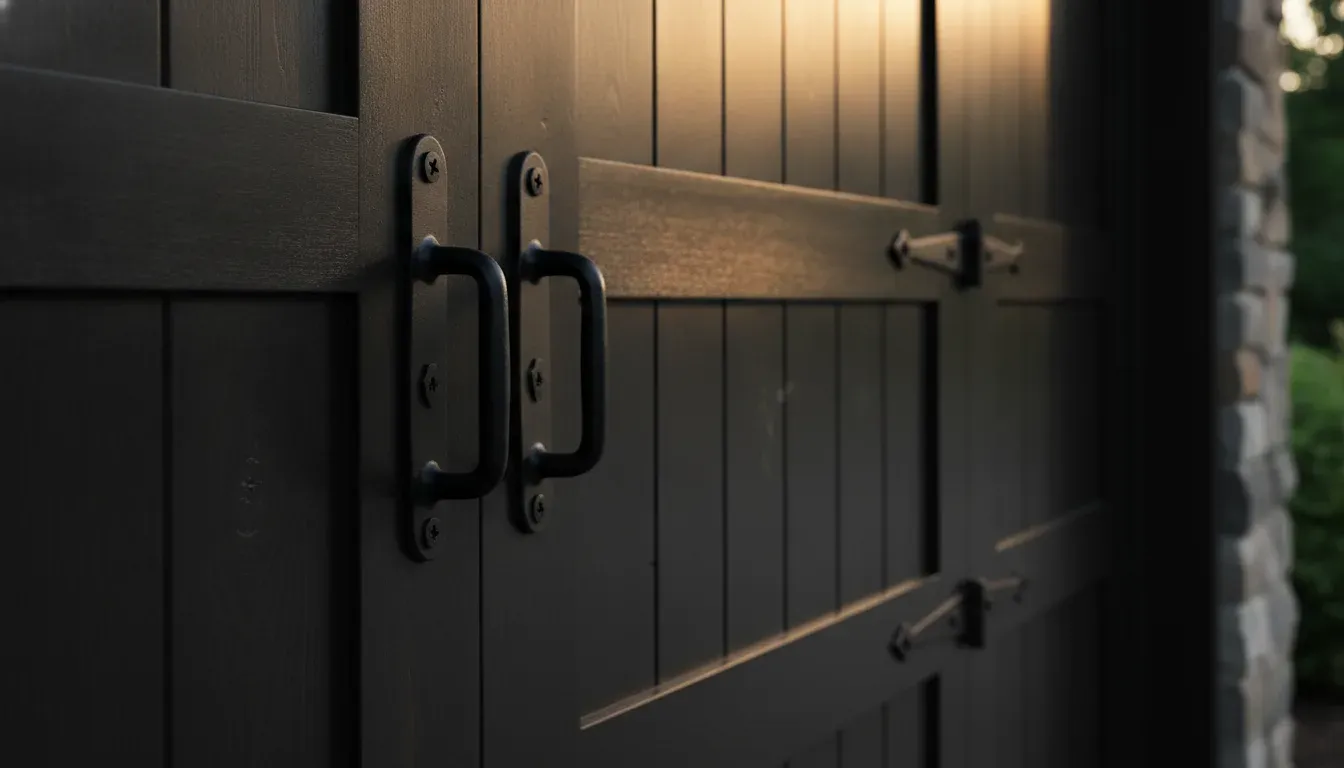
Solid Black vs. Ebony-Look Semi-Transparent: What Each Looks Like
Solid black creates the most uniform, high-contrast surface. An ebony-look semi-transparent stain keeps more grain and tonal movement visible. A charcoal or black-brown direction sits between them, giving the facade a dark appearance with softer warmth for brick, stone, or natural wood siding.
A solid black finish and an ebony-look semi-transparent finish can both support a dark exterior, but they communicate different things. Choose based on the architecture, the wood itself, and how much natural variation you want the door to contribute.
| Finish direction | Visual character | Best fit |
|---|---|---|
| Solid black paint or semi-solid finish | More even color with less visible grain and stronger contrast | Minimal facades, bold trim, and homes where the door should read as a clean dark plane |
| Ebony-look semi-transparent stain | Deep color with visible grain, knots, and tonal variation | Modern homes that need warmth, texture, and a more natural material presence |
| Black-brown or charcoal stain | Dark appearance with softer warmth than a true black | Brick, natural stone, wood siding, and exteriors with warm undertones |
Craft Doors USA offers 18 semi-transparent stain colors, including dark directions such as Wenge, Black Walnut, Walnut, and Dark Mahogany. Semi-solid stains are available upon request, and custom paint colors can be specified by manufacturer and color code. Review the custom wood garage door stain colors before deciding whether the door should be nearly black, warm black, or a deep brown that reads dark from the street.
A sample is especially useful when the design includes multiple materials. Hold it beside the actual stone, siding, window frame, and entry door finish rather than judging it against a screen. A dark garage door should relate to the home's fixed materials in both direct sun and shade.
Contact Our Sales & Design Specialists
Exterior Color Pairings That Work With a Black Garage Door
The most reliable pairings give a black garage door contrast and repeat one or two related dark accents elsewhere. Pale stone, cream, white, warm brick, natural wood, gray siding, and black window frames can all work when the finish undertone matches the home's fixed materials.
The strongest pairings give the dark door enough contrast to be intentional while repeating one or two supporting tones elsewhere on the home. Start with the materials that cannot easily change, such as masonry, roofing, windows, and existing siding.
White, cream, and pale stone
Light exteriors create the clearest contrast with black wood garage doors. White and cream siding make the door a focal point, while pale limestone or light gray stone can keep the combination from feeling too sharp. Use warm black or charcoal when the masonry has beige or yellow undertones, and reserve a cooler black for crisp white or blue-gray materials.
Warm brick and terracotta
Red brick, brown brick, and terracotta roofs usually work best with a black finish that has some warmth. Black Walnut, Dark Mahogany, or a custom black-brown direction can connect the door to the brick without making the facade feel divided into two unrelated color blocks. Black hardware and dark window frames can repeat the door color in smaller, controlled details.
Natural wood and cedar siding
Black beside natural wood creates a useful contrast between a dark anchor and a lighter organic surface. Match the undertone, not necessarily the exact color. A charcoal-black door can sit comfortably beside pale cedar, while a warm black-brown can relate to darker beams or walnut accents. The goal is a measured difference in value with enough shared warmth to keep the exterior cohesive.
Gray, taupe, and dark siding
On a gray or taupe home, a black door can either sharpen the palette or disappear into it. If the siding is already dark, consider a finish with visible grain, a different sheen, or a slightly warmer tone so the garage door has depth. If the home is mid-gray, true black hardware and window trim can create a simple, consistent frame.
For clean horizontal lines and limited face-frame trim, compare the Modern Landscape garage door collection. A dark finish can support that restrained geometry, while windows, panel direction, and hardware determine how much visual weight the door carries.
Maintenance Considerations for Dark-Stained Wood Doors
Dark-stained wood doors need the same basic protection as other exterior wood doors, with extra attention to visible dust, water marks, scratches, fading, and exposed edges. Inspect the finish regularly, limit repeated moisture, clean gently, and follow care guidance for the chosen finish system.
Dark finishes are straightforward to live with when the finish, exposure, and cleaning plan are considered at the design stage. They can show dust, pollen, water marks, and scratches more readily than a lighter, varied wood tone. Sun and weather exposure also affect every exterior wood finish, so the door should be inspected as part of the home's regular exterior care.
- Keep sprinkler spray and standing water from repeatedly reaching the lower door sections.
- Inspect the finish for fading, exposed wood, peeling, cracks, or areas where water collects.
- Clean gently with the method recommended for the selected finish. Avoid aggressive pressure washing that can damage the wood surface.
- Pay close attention to horizontal ledges, panel joints, hardware, and the bottom edge where dirt and moisture can collect.
- Plan finish maintenance around the actual exposure of the door, including direct sun, roof runoff, shade, and local humidity.
Maintenance is also a reason to be specific about the finish system before production. Craft Doors USA hand-stains panels and cures them under heat lamps as part of its finishing process. The final care recommendations should match the selected wood, stain or paint, and installation conditions. A design consultation can address those details before the shop drawings are approved.
Read how the custom door process works to see how material selection, finish decisions, shop drawings, and production fit together. The article's broad modern-design pillar also covers the relationship between panel geometry, glass, hardware, and the architecture around the door.
Is a Black Wood Garage Door a Good Idea?
A black wood garage door is a good choice when the home's architecture can support a strong dark anchor and the owner is comfortable maintaining an exterior wood finish. Select the wood, undertone, grain visibility, hardware, and care plan together instead of choosing color in isolation.
A black wood garage door is a strong choice when the home's exterior has a clear color structure and the homeowner wants the garage to read as an architectural feature. It is less about following a passing color trend than choosing a finish that supports the facade, preserves the right amount of grain, and can be maintained in the home's climate and exposure.
Before selecting the final finish, confirm the wood species, the desired grain visibility, the black or charcoal undertone, the panel and hardware design, and the relationship to the entry door. Custom color matching can help the garage and entry doors feel like part of one exterior without forcing every material to be identical.
Black Wood Garage Door FAQs
Do black wood garage doors show the grain?
They can. Semi-transparent stains allow more grain, knots, and tonal variation to show through, while solid paint and semi-solid finishes create a more uniform surface. The wood species and finish application both affect the final appearance.
What is the best wood for a black garage door?
There is no single best wood for every home. Knotty Western Red Cedar gives a dark finish visible character, while clear cedar, alder, cypress, Douglas fir, mahogany, and other available materials create different grain, color, and performance considerations. Choose the species with the finish and architecture together.
Can a custom wood garage door be painted black?
Yes. Craft Doors USA offers custom paint colors specified by manufacturer and color code, along with semi-transparent and semi-solid stain directions. Paint generally gives a more consistent color, while stain keeps more of the wood's natural variation visible.
Should the front door match a black garage door?
It does not have to match exactly, but the two doors should feel related. Matching the finish, undertone, hardware, or a smaller accent can create a cohesive exterior. Craft Doors USA also builds custom matching entry doors for a coordinated design.
How do I choose between black and charcoal?
Compare finish samples beside the home's stone, siding, windows, and roof in both sun and shade. True black creates the strongest contrast. Charcoal or a warm black-brown can show more depth and often works better with natural stone, brick, or wood siding.
For a custom black wood garage door, the most useful next step is a conversation about the home's architecture, opening dimensions, wood species, finish direction, and hardware. Craft Doors USA hand-builds custom wooden garage and entry doors in Newton, North Carolina and ships throughout the continental United States.